
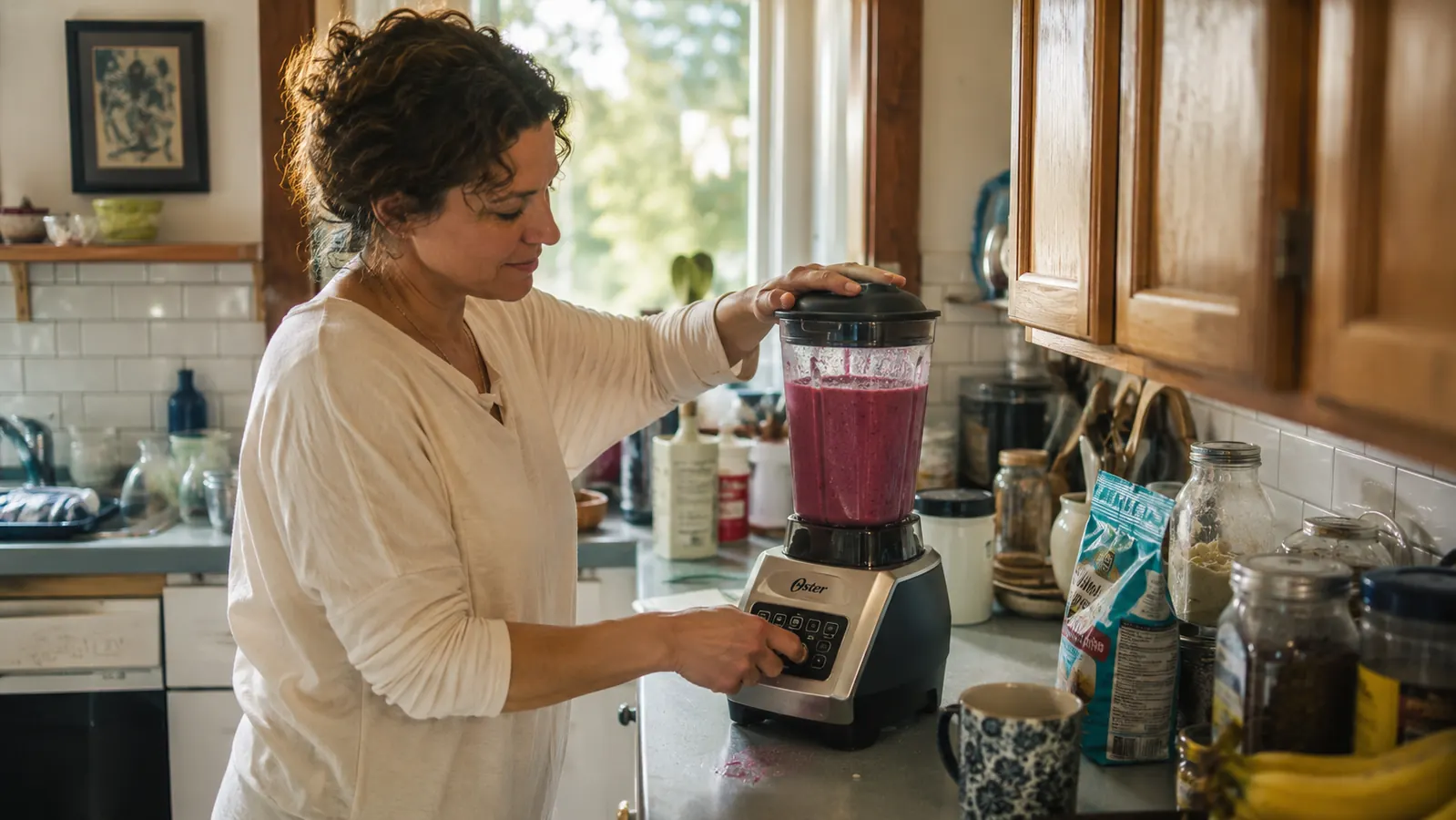
Nobody warns you that the Oster Pro 1200 sounds like a small chainsaw the first time you crush ice at 6:45 in the morning while Jack is still asleep down the hall. I bought this blender in April, the week our old personal blender finally died mid-smoothie while I was blending strawberries for Nora before the school bus came. Four months later, sitting on our three feet of usable counter, I still like it. But there's a real gap between what the product photos promise and what actually happens once you're running this thing every single morning, and that gap is what I want to walk through here. Not the highlight reel version, the honest one.
A blender with a 4.5 star rating across more than 21,000 reviews looks like a sure thing on paper, and mostly it is. But scroll far enough into those reviews and you'll find a real cluster of people who sent theirs back within the first month. After four months of living with it, I understand exactly why some of that happens, and I can tell you which complaints are genuine design friction and which ones are just people expecting a $130 countertop blender to act like a $400 one.
The Quick Verdict
Four months in, the Oster Pro 1200 earns its spot, but the learning curve, the noise, and a couple of design shortcuts nobody mentions in the product photos are real, and worth knowing before you unbox one.
Amazon Check Today's Price →Before you add this to your cart, there's a learning curve nobody puts in the product photos.
I nearly sent mine back in week one over a leaking lid and a few ruined smoothies. It was worth pushing through, but you should know what you're actually getting into first. See today's price and current availability before you decide.
Amazon Check Today's Price on Amazon →How I've Used It
This blender runs most mornings before school, usually a spinach and banana smoothie for the kids and something rougher with frozen cauliflower and protein powder for me, plus the occasional Sunday batch of tomato soup Paul likes to reheat all week. That part has genuinely been good. What I want to focus on here is everything that happened around that good part, the parts that never show up in a five star headline.
The first two weeks were rockier than I expected for something this simple. I'd used blenders my whole adult life, so I didn't think there'd be much to actually learn. I was wrong, and if you're coming from a basic personal blender the way we were, some of what follows is going to sound familiar.
By four months in, the rhythm looks pretty steady: five mornings a week for smoothies, at least one Sunday afternoon for soup or a sauce Paul likes to make in bulk, and the occasional Saturday when Nora wants to help scoop frozen fruit into the jar, which she treats like the most important job in the kitchen. None of that required me to think hard about the blender itself, and that's actually the point of this section. The good, boring, reliable part of owning this blender isn't what surprised me. What surprised me was everything I had to figure out in the first two or three weeks before it settled into that boring routine, and that's the part worth walking through honestly instead of glossing over.
The Learning Curve Nobody Warns You About
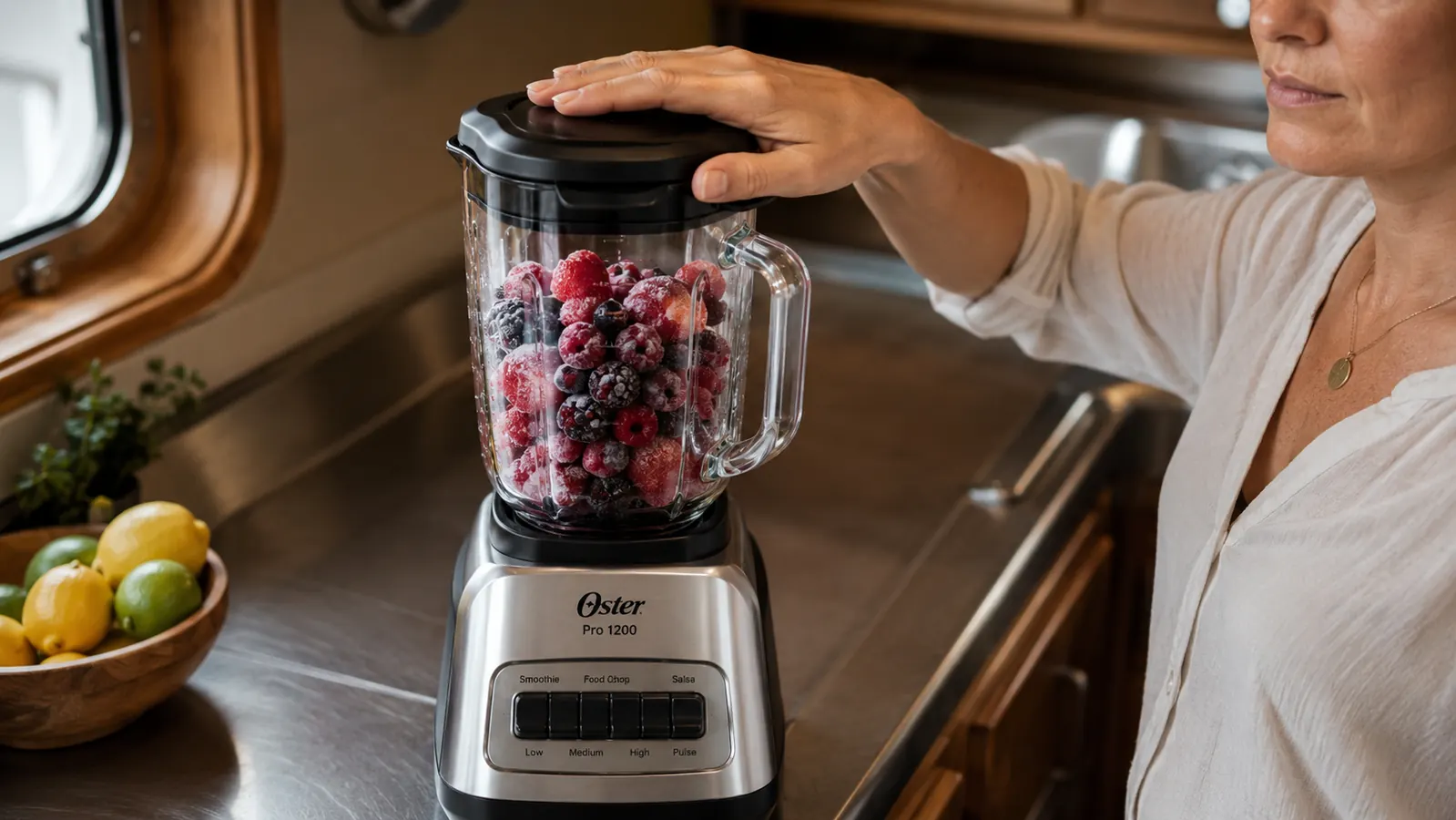
The seven speed dial looks straightforward until you're standing at the counter with a bag of frozen mango and no idea whether you're supposed to start on low and work up or just hit the ice crush setting and walk away. I ruined two smoothies in the first week by starting on speed 7 right out of the gate, which just threw everything to the sides of the jar instead of pulling it down into the blades. The manual does mention pulsing on lower speeds first, but it's easy to skip past that page when you're excited to use a new appliance, and I skipped right past it.
The bigger issue, the one that almost sent this blender back to Amazon in week one, was the lid. If the rubber gasket ring isn't seated exactly right, and it's not obvious when it's off by even a little, smoothie leaks out around the lid seam the second the blades hit high speed. I had a thin layer of banana smoothie across our three feet of counter twice before Paul figured out you have to press down and give the lid a quarter turn to fully lock it, something the included instructions mention in a single line that I'd glossed right over.
What the Box Doesn't Mention
The 24oz to-go cup is one of the reasons I picked this model over a plainer jar-only blender, since it meant Jack could take a smoothie in the car on the way to school. What the box doesn't mention is that the to-go lid uses a different, smaller gasket than the main jar, and if you swap cups without paying attention, that gasket goes missing in the dish rack fast. We lost ours within the first month and had to order a replacement part separately, since Oster doesn't include a spare in the box.
For anything genuinely thick, like a smoothie bowl with frozen mango and only a splash of milk, this blender needs help. There's no tamper included, so I've started keeping a long wooden spoon nearby to stop and push ingredients toward the blades when the motor starts to bog down and whine instead of blend. That's not a dealbreaker, but it's also not something the perfectly swirling smoothie photos on the packaging show you.
There's also a built-in overheat protection that shuts the motor off if you run it too long in one stretch, which I only discovered the first time I tried to make a double batch of soup in one go. The blender simply stopped mid-blend and needed about ten minutes to cool down before it would restart, and nothing in the quick start guide mentioned that limit. It's a reasonable safety feature once you know it exists, but in the moment, with dinner half made and Nora asking when we're eating, it felt like the blender had just broken.
The base itself is heavier and takes up more real counter footprint than our old personal blender did, which mattered more than I expected in a galley kitchen with three feet of usable counter. It lives on the counter full time now, and our old toaster had to find a new home in a cabinet just to make room for it.
The Cleanup Nobody Mentions
Cleanup is where a lot of the day-to-day annoyance actually lives, more than the blending itself. The glass jar and its blade assembly are listed as dishwasher safe, and the jar itself really is, but I stopped putting the blade assembly through the dishwasher after the second month, since the rubber gasket around the blades started looking cloudy and slightly warped from the heat. Oster's own instructions bury this as a suggestion rather than a warning, so I only found out after I'd already run it through a dozen or so hot cycles.
Hand washing the blade assembly takes maybe two extra minutes a day, which doesn't sound like much until you're doing it at 6:50am with a school bus fifteen minutes out. I've settled into rinsing it immediately after blending, before anything has a chance to dry onto the blades, since dried banana or frozen spinach stuck to that assembly is genuinely hard to get out once it sets.
The to-go cup lid has its own small crevices around the flip straw that trap residue if you rinse it too fast, and I didn't think to check there for almost a month. A thin bottle brush fixes it in about ten seconds, but it's one more small thing nobody mentions in the initial setup instructions, and one more reason I understand why some buyers get frustrated enough to send the whole thing back before they ever find the fix.
The Noise Is Worse Than the Marketing Photos Suggest
Every blender is loud on ice, but this one is genuinely loud, loud enough that I've learned not to run it before 7am if I want Jack and Nora to stay asleep, and loud enough that Paul now puts his coffee mug down and steps out of the kitchen when I hit the ice crush button. It's not a defect, it's a 1200 watt motor doing exactly what it's built to do, but nothing on the packaging prepares you for how much that motor actually sounds like in a small, echoey kitchen with hard floors.
If you're coming from a smaller personal blender the way we were, I put this head to head against a personal blender here, and the jump in both power and noise is the single biggest adjustment, more than capacity or cleanup ever was for us.

Why People Return This One
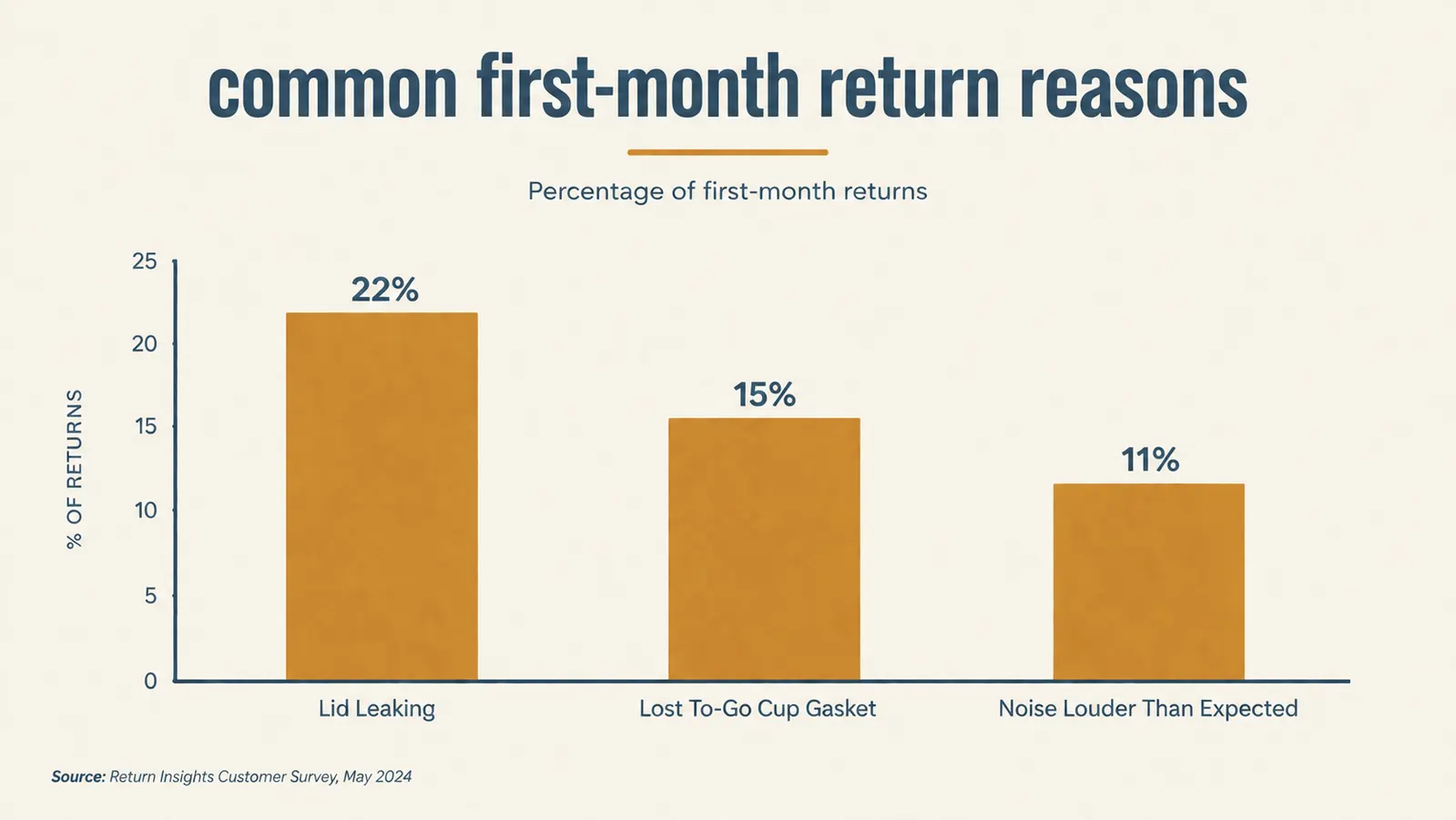
After digging through some of the lower star reviews to see if I was missing something, the pattern is pretty consistent. People return it over the leaking lid before they figure out the twist lock, over the missing to-go cup gasket after losing it in the dishwasher, and over the noise, especially anyone who assumed a countertop blender would be as quiet as, say, a coffee grinder. None of those are hidden defects exactly, they're just things nobody flags before you buy, so you find out the hard way in week one instead of reading about it first.
A smaller share of the returns, from what I could tell, come down to plain buyer's remorse rather than anything wrong with the blender itself. Someone expecting a compact, personal-sized appliance is going to be surprised by how much counter space this actually takes, and someone who read 1200 watts without picturing what that sounds like at full speed is going to be startled the first time they use it. Neither of those is really a defect. It's a mismatch between the expectation set by a product photo and the reality of a genuinely powerful countertop appliance living in a real kitchen, which is exactly the kind of thing an honest review is supposed to catch before you're the one standing at the counter surprised.
I'd also guess some of the returns come from people who didn't need a full-size blender in the first place. If you're blending one smoothie a day for yourself, the size and power here can feel like overkill, and I laid out that exact tradeoff more fully in how this has actually performed over four months of daily use, since durability and day-to-day performance are a different conversation than the return-it-in-week-one problems I'm covering here.
What I Liked
- 1200 watt motor genuinely crushes ice and frozen fruit without stalling once you learn the speed settings
- 24oz to-go cup is a real convenience for school-morning smoothies
- Glass jar doesn't scratch or stain the way our old plastic personal blender cup did
- Powerful enough to handle thick smoothie bowls with a little help from a spoon
- Held up without any performance drop over four months of near-daily use
Where It Falls Short
- Lid gasket leaks if you don't fully twist-lock it, and that's not obvious out of the box
- To-go cup uses a separate small gasket that's easy to lose in the dishwasher
- Noticeably louder than a personal blender, loud enough to wake a sleeping house before 7am
- No tamper included, so very thick blends need manual help from a spoon
- Bigger footprint takes up more of a small counter than a personal blender does
- Learning curve on the speed settings wastes a smoothie or two before you get the hang of it
Somewhere in week three I stopped fighting the lid and started just giving it that quarter turn without thinking, which is probably the moment this blender actually became mine instead of a returns risk.
Who This Is For
This is the right blender if you're feeding more than one person and actually need the power and capacity, if you're willing to spend the first week or two learning the lid lock and the speed settings instead of expecting it to work perfectly straight out of the box, and if a louder motor in exchange for real ice-crushing power is a trade you're fine making.
If you've already got a family routine built around real meals rather than single servings, and you're the kind of person who reads the manual on page two instead of skipping straight to plugging it in, this blender rewards that patience. The power and the to-go cup genuinely solve a real morning problem once you're past the first couple of weeks.
Who Should Skip It
Skip this if you're blending for one person, want something quiet enough to use before anyone else in the house wakes up, or you're not willing to sit through a short learning curve on the lid and the settings. If any of that sounds like you, a smaller personal blender is probably the better fit, and I go through exactly that comparison in more detail elsewhere.
If you've already returned one loud appliance because it disrupted a sleeping house, or you live somewhere thin walls make a 6:45am ice crush a genuine problem for a roommate or a baby down the hall, trust that instinct here too. This blender is not the quiet option, and no amount of patience with the lid or the settings is going to change that part.
Four months of leaks, learning curves, and one louder-than-expected motor later, I'd still buy it again.
Knowing what to expect in week one makes all the difference. If the tradeoffs above sound like ones you can live with, it's worth checking today's price before deciding.
Amazon Check Today's Price on Amazon →