

I want to say upfront that this isn't the review Cuisinart would pick to put on the box. I bought the Custom Classic Toaster Oven Broiler, the TOB-40NNAS, back in February after our old countertop oven finally gave out, and six months of real use in a galley kitchen with three feet of usable counter has taught me things the packaging never once mentioned. If you're reading actual reviews before you buy instead of just the star rating, this is the one I wish I'd read first.
Paul rolled his eyes a little when the box showed up, mostly because we already have a full-size oven and he didn't see the point of another appliance eating into our three feet of counter. Jack, who was 11 in February and treats toast as a food group, was more interested. Nora asked if it had a light inside so she could watch the toast turn brown, and the honest answer is no, it doesn't, which is exactly the kind of small omission this whole review is going to be full of.
The Quick Verdict
Six months of real use in a small galley kitchen: it toasts and bakes well enough once you learn its quirks, but the burn-off smell, the guessing-game dial, and the small capacity are worth knowing before you buy, not after.
Amazon Check Today's Price →Wondering if the Cuisinart Custom Classic actually works the way the listing photos promise?
Six months of daily use in our kitchen taught me exactly where this Cuisinart toaster oven earns its keep and where the marketing leaves things out. Before you decide, take a look at today's price and current availability, then keep reading for what the box doesn't tell you.
Amazon Check Today's Price on Amazon →How I've Actually Used It
This isn't a one-week test unit that got returned before the honeymoon phase wore off. It's been on our counter since February, run most days for toast, at least three times a week for something baked, and often enough for broiling that I've learned exactly how aggressive that setting really is. I didn't buy it to replace our full-size oven. I bought it because running a full oven just to toast four slices of bread or reheat a small casserole felt like using a sledgehammer on a thumbtack, and I wanted something that could handle the small jobs without heating up the whole kitchen.
What I didn't expect was how much of the first month would be spent learning the thing rather than just using it. I've written up the fuller day-to-day story, the meals, the timing, the routine it settled into, in my long-term review after six months of daily use. This one is narrower on purpose. This is the version with the annoyances left in, the stuff that made me pause before I trusted it, and the honest reasons I think some buyers end up sending theirs back.
What Nobody Tells You Before You Plug It In
The first thing nobody mentions in the listing or the box copy is the smell. Every electric oven with an exposed heating element has some burn-off period from the manufacturing residue on the coils, but nobody tells you it can take longer than you'd expect, and nobody tells you to plan for it before you set something up three feet from where your kids eat breakfast. I ran mine empty for about 20 minutes with the kitchen window cracked before I trusted it near actual food, and even then I caught a faint chemical smell on the first two real bakes. It faded out by week two, but that's two weeks nobody warned me about, and if I hadn't already lived through it with a different appliance years ago, I would have assumed something was wrong with the Cuisinart.
The second thing is the learning curve, and this is the part that actually cost me a full batch of cookies. Our full-size oven runs about 15 degrees hot no matter what the dial says, and I've spent years unconsciously adjusting for it without even thinking about it. This toaster oven runs differently, closer to true on the dial but with a hot spot near the back corner that I didn't discover until a tray of biscuits came out browned unevenly, one side nearly twice as dark as the other. Nobody puts that in the instruction booklet. You learn it the way I learned my old oven's quirks, by burning something and adjusting, except this time it took three tries before I trusted the timing enough to walk away from it.
Nobody mentions, either, that the inside of the door gets hot enough to fog and stay warm to the touch for a good ten minutes after you turn it off, which matters in a house with an 8 year old who likes to open the door and check on things. Nora learned that lesson once, gently, and now gives it a wide berth without being told.
The Dial Is Charming Until You're Actually Timing Dinner
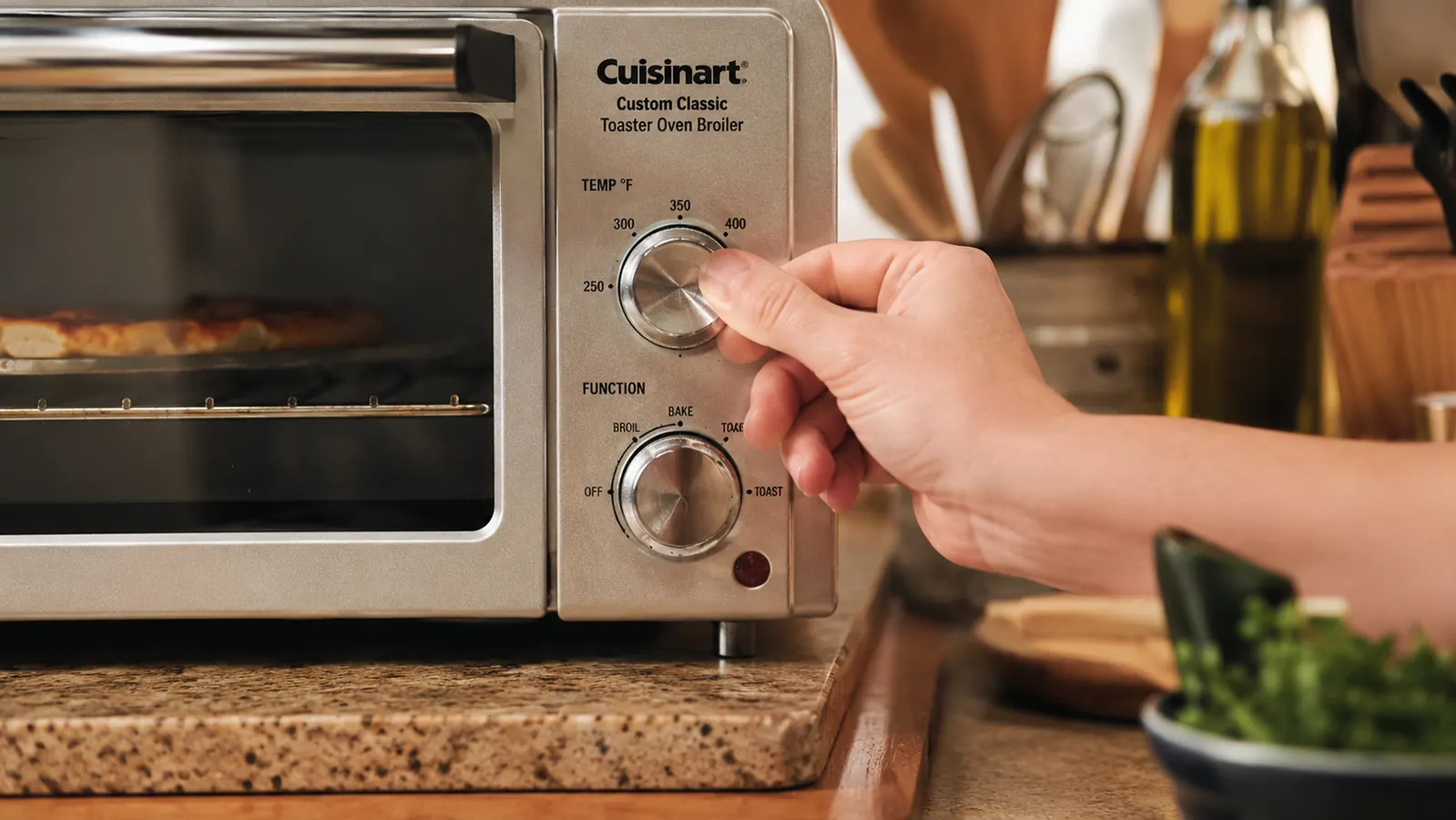
This is a manual dial oven, not a digital one, and I want to be honest that I didn't fully register what that meant until I was standing in front of it on a Tuesday trying to get a casserole reheated in time for Jack's practice. There's no display telling you exactly how many minutes are left. The temperature dial has markings, but they're broad strokes, not precise numbers you can dial in and trust the same way you'd trust a digital readout. You're eyeballing it, the same way you'd eyeball a stovetop knob, and that's fine once you've used it enough times to know where 350 actually lives on that dial. It is not fine the first few weeks, when you're guessing and hoping the timer bell rings before something scorches.
The timer itself is a mechanical dial too, and it ticks the whole time it's running, loud enough that Paul asked the first week if something was wrong with it. Nothing was wrong. That's just the sound it makes, and it's one of those small details that would have saved me a moment of alarm if a single review I'd read before buying had mentioned it.
The broil setting deserves its own honest warning. It runs hotter and faster than I expected the first time I used it, close enough to a flame that a cheese-topped dish I wasn't watching closely enough set off our kitchen smoke alarm on only its second use in our house. That's on me for not standing right in front of it, but it's also a real difference from a full-size oven's broiler, which tends to be more forgiving over a slightly longer window. If you're used to walking away from broiling in a full oven, don't do that here.
Six Months In: What Actually Wears on You Day to Day
The exterior housing gets genuinely hot during a long bake, hot enough that I keep a standing rule with Jack and Nora that nobody touches the sides while it's running or for a few minutes after. In a galley kitchen with three feet of usable counter, that's not an abstract safety note, it's a real constraint, since the sides of the unit sit close to wherever else is on that counter. We moved the coffee maker further down the counter after the first week specifically because the housing heat was making the plastic base warm to the touch.
Capacity is the other thing that wears on you slowly rather than all at once. At 0.5 cubic feet, this fits a personal-size baking sheet or four slices of bread comfortably, but it does not fit a full family-size sheet pan, and I learned that the hard way trying to reheat a dinner's worth of chicken thighs in one pass. I ended up doing two smaller batches, which ate up more time than it saved. If you're cooking for four most nights, this isn't going to replace your full-size oven for a real dinner, and it was never going to, but the listing photos don't exactly make that limitation obvious.
The crumb tray needs to come out and get wiped down more often than I expected, usually every few days rather than weekly, because grease builds up around the dial mechanism faster in a compact unit than it does in our full-size oven's much larger cavity. It's not a hard job, maybe two minutes with a damp cloth, but it's a maintenance habit nobody mentions until you're the one doing it. I compared the day-to-day upkeep directly against our full-size oven in this side-by-side breakdown if you want the fuller picture before deciding which one earns a spot on your counter.
Who Actually Returns This, and Why
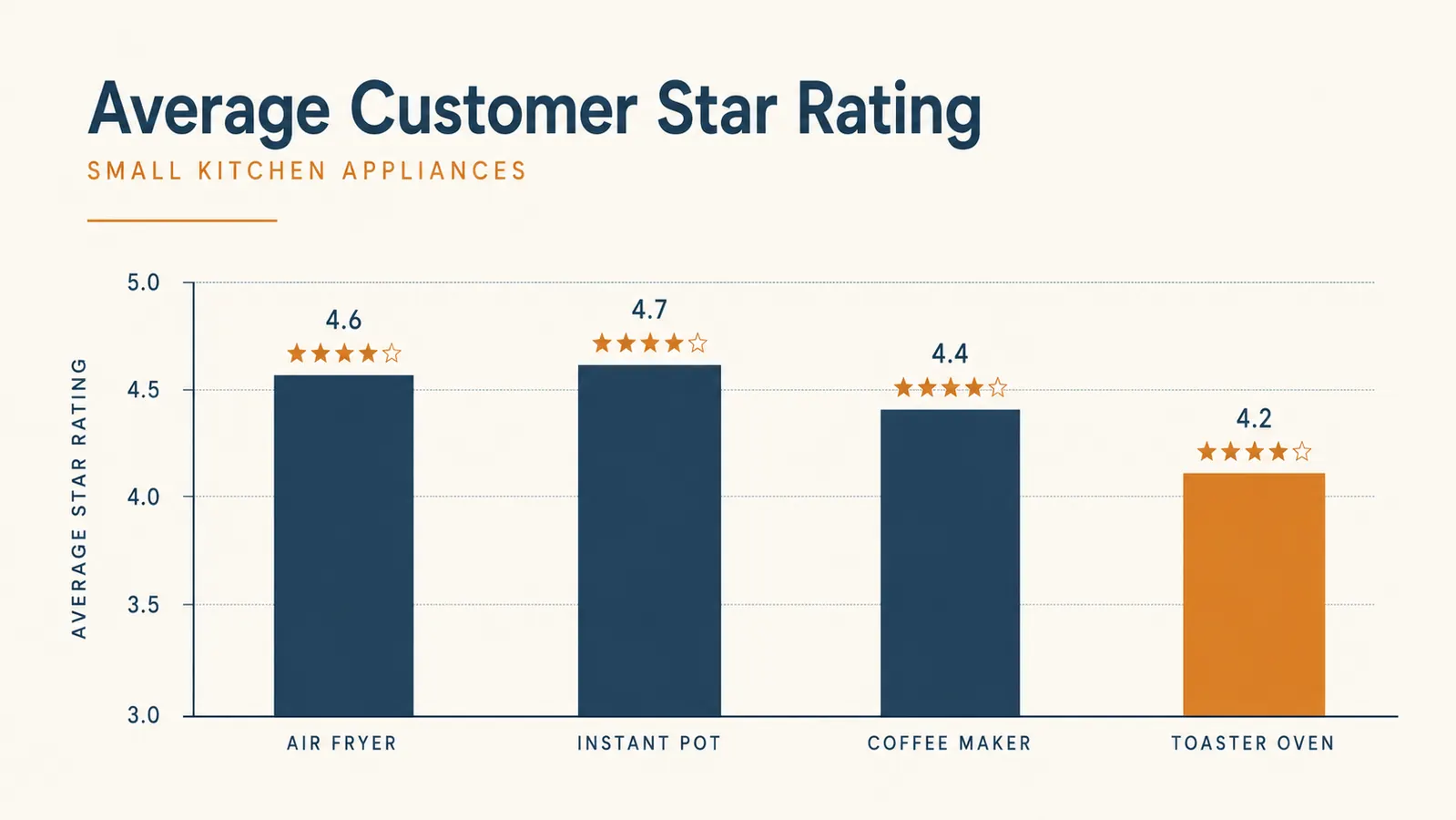
I'll be honest about the numbers, because I think reviews that only show the highlight reel do buyers a disservice. This unit sits at a 4.2 star average, noticeably lower than the 4.6 our air fryer carries, and that gap isn't nothing. Reading through what other buyers say, the pattern in the lower-star reviews is consistent: people expected a digital display and got a dial, people expected a quieter timer and got a mechanical tick, and people expected a bigger interior than 0.5 cubic feet actually delivers once they tried to fit a real meal in it. None of those are defects exactly. They're mismatches between what the photos suggested and what showed up on the counter.
I came close to being one of those returns myself, in week one, after the smell and the uneven hot spot and the smoke alarm incident all happened inside the same seven days. What kept me from sending it back was recognizing that most of what frustrated me wasn't a broken unit, it was an unfamiliar one, and unfamiliar things get easier once you've learned their specific habits. If you're the type of cook who wants to set a number and trust it exactly, a dial-based unit like this one is going to test your patience longer than it should. If you're willing to spend two or three uses learning where your oven actually lands, it settles into something dependable.

What the Box Doesn't Mention About Broiling
Broiling in this unit means the rack sits close enough to the top element that a minute of inattention is the difference between golden and burnt. The listing mentions a broil function the same way it mentions a bake function, as one line among several, with no real warning that this is the setting most likely to need your full attention standing right there. After the smoke alarm incident, I broil with the door cracked slightly and a timer running on my phone as backup to the mechanical dial, and I haven't had a repeat since. That's not information that came from the manual. It came from a Tuesday night that went sideways.
The other thing worth naming honestly is the ventilation. This puts off more heat into the surrounding air than I expected for something this size, noticeably more than our air fryer does for a comparable cook time. In a small kitchen without much airflow, running it for a 25 minute bake on a summer evening makes the room warmer than I'd like, which somewhat undercuts the whole point of using a smaller appliance instead of the full oven in the first place.
What I Liked
- Toasts and bakes reliably once you've learned where your specific unit's temperature actually lands on the dial
- Small enough footprint to fit a real spot on a tight counter
- Broil function gets genuinely hot, good for finishing dishes fast if you watch it closely
- Held up through six months of near-daily use without any mechanical issues
- Costs meaningfully less to run for small jobs than heating a full-size oven
Where It Falls Short
- Noticeable burn-off smell the first several uses that the listing never mentions
- Manual dial with no digital display makes precise timing a guessing game at first
- Hot spot near the back corner caused uneven browning until I learned to rotate trays
- 0.5 cubic foot interior can't fit a full-size sheet pan or a real family dinner
- Broil setting runs hot and fast enough to set off a smoke alarm if you walk away
- Exterior housing gets hot enough that kids need a standing rule to stay clear
- Puts off more ambient heat into a small kitchen than a comparable air fryer would
Six months in, I don't regret the counter space it took. I do wish somebody had told me it needed a two-week trial period before it earned my trust.
Who This Is For
This is a good fit if you're mostly toasting, reheating, and doing small bakes for one or two people at a time, and you're willing to spend the first week or two learning a manual dial instead of expecting a digital shortcut. It's also a reasonable pick if your full-size oven is reserved for real family dinners and you just need something smaller for the in-between jobs, the way ours has settled into being. If you want the fuller list of everyday reasons a toaster oven earns real counter space in a small kitchen, I laid that out in 10 reasons a toaster oven earns its spot.
Who Should Skip It
If you're cooking a full dinner for four most nights, or you specifically want a digital display and precise timing without a learning curve, this isn't going to feel like the right fit, and the lower star average reflects exactly that mismatch for a lot of buyers. If your counter doesn't have real room to spare, or if a warm-running appliance in a small kitchen is a dealbreaker for you in summer, it's worth being honest with yourself before you buy rather than after. For the fuller day-to-day account of how it's actually performed here, my long-term review covers the parts of this that went right.
Still deciding after reading the parts nobody else mentions?
Every appliance has a learning curve and a few rough edges, and now you know exactly what this one's are before you commit any counter space to it. If it still sounds like the right fit for your kitchen, check today's price and current availability while it's in stock.
Amazon Check Today's Price on Amazon →